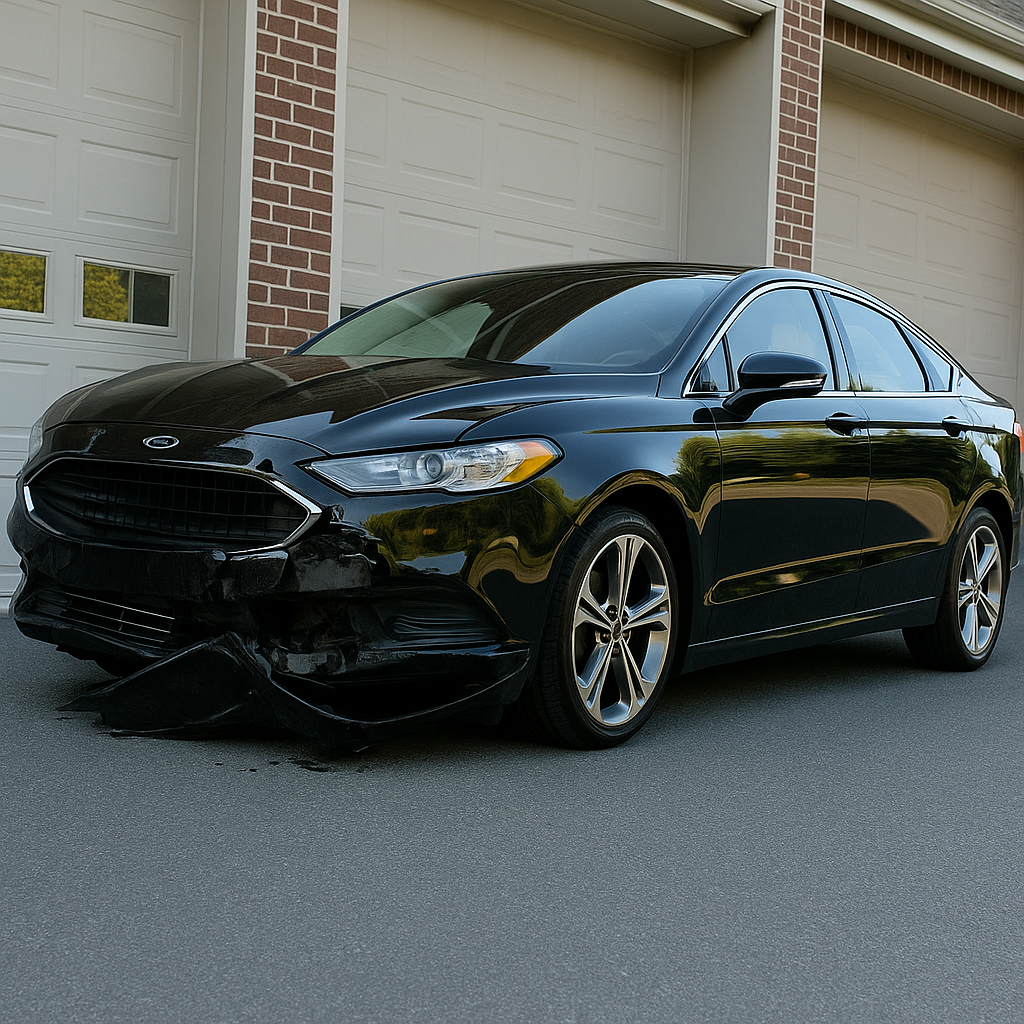
A hit and run conviction in Alaska triggers mandatory SR-22 filing, license revocation, and steep rate increases — but filing duration and reinstatement paths depend on whether you were charged with a misdemeanor or felony leaving the scene.
What a Hit and Run Conviction Does to Your Alaska Driving Record
Alaska treats leaving the scene of an accident as a serious offense with immediate licensing consequences. A misdemeanor hit and run — typically involving property damage only — results in license revocation for a minimum of 90 days and mandatory SR-22 filing once you're eligible for reinstatement. If the incident involved injury or death, you're facing a felony charge, which carries a minimum 1-year revocation and potential permanent high-risk classification with insurers.
The Alaska Division of Motor Vehicles assigns 10 points to your driving record for leaving the scene, which alone exceeds the 12-point threshold that triggers additional administrative action if combined with other recent violations. Most carriers classify hit and run convictions as major violations — on par with DUI — which means you're looking at rate increases in the 80–150% range and possible non-renewal at your current insurer.
Your SR-22 filing requirement doesn't start on your conviction date. It begins only after you've completed your revocation period, paid all reinstatement fees (typically $100 administrative fee plus any court-ordered restitution), and filed proof of financial responsibility. If you were convicted in January but can't reinstate until April, your 3-year SR-22 clock starts in April, not January. Many drivers file early thinking it counts toward their requirement — it doesn't. Alaska SR-22 requirements and filing rules
SR-22 Filing Duration and Requirements After Hit and Run in Alaska
Alaska's standard SR-22 filing period for a hit and run conviction is 3 years from the date of license reinstatement, assuming you were charged with misdemeanor leaving the scene. If your charge was elevated to felony due to injuries, property damage exceeding $2,000, or prior convictions, the DMV may extend the filing requirement to 5 years or longer based on court order. Your reinstatement paperwork will specify the exact duration — don't rely on general timelines.
The SR-22 itself is a certificate your insurance carrier files with the Alaska DMV proving you carry at least the state minimum liability coverage: $50,000 bodily injury per person, $100,000 per accident, and $25,000 property damage. Your carrier charges a one-time filing fee, typically $25–$50 in Alaska, but the real cost is the premium increase. Non-standard carriers writing SR-22 policies after major violations often quote $150–$300 per month for minimum coverage, compared to $60–$100 for a clean-record driver.
If your SR-22 lapses for any reason — missed payment, non-renewal, policy cancellation — your carrier must notify the DMV within 10 days. Alaska immediately suspends your license and restarts your entire SR-22 filing period from zero once you reinstate again. A single lapse can add 3+ years to your total compliance timeline. SR-22 insurance
Finding Coverage After a Hit and Run Conviction
Most standard carriers in Alaska — GEICO, State Farm, Progressive's preferred tier — will non-renew or decline to quote after a hit and run conviction appears on your MVR. You're shopping in the non-standard market, where carriers specialize in high-risk profiles and price accordingly. In Alaska, that typically means Bristol West, The General, Acceptance Insurance, or regional carriers like Alaska USA Insurance.
Non-standard carriers evaluate hit and run convictions differently. Some treat it identically to DUI and require proof of completed court obligations before quoting. Others focus on your total violation count over the past 5 years — if the hit and run is your only major incident, you may qualify for mid-tier non-standard rates around $180–$220 per month. If you have additional at-fault accidents, speeding violations, or a prior DUI, expect quotes in the $250–$350 monthly range or conditional coverage requiring larger down payments.
You'll need to disclose the hit and run conviction on every application. Carriers pull your MVR during underwriting, and misrepresentation — even by omission — gives them grounds to rescind coverage retroactively. If you're struggling to find any carrier willing to write you, Alaska does not operate an assigned risk plan, but you can request quotes from surplus lines carriers through an independent agent who works the non-standard market. These policies cost more but fulfill your SR-22 requirement. non-standard auto insurance
How Long Until Your Rates Drop After SR-22 Filing Ends
Completing your 3-year SR-22 filing period doesn't automatically return you to standard rates. The hit and run conviction remains on your Alaska driving record for 10 years, though most carriers only review the most recent 3–5 years when underwriting. Once your SR-22 requirement ends and you've maintained continuous coverage without lapses, you can start shopping standard carriers again — but expect them to still surcharge you for the conviction.
Rate reductions happen in stages. In year 4 after your conviction — 1 year post-SR-22 — you may see quotes 30–50% lower than your non-standard rates if you've kept a clean record since. By year 6, the conviction has aged enough that some standard carriers will quote you at near-normal rates, though you'll still pay a 10–20% surcharge compared to a completely clean record. By year 10, when the conviction falls off your MVR entirely, you're back to baseline pricing assuming no new violations.
The fastest way to reduce rates during your SR-22 period is to avoid any additional violations or at-fault accidents. A single speeding ticket or fender-bender resets how carriers evaluate your risk and can keep you in the non-standard market for several more years. Drivers who complete their SR-22 requirement with zero additional incidents typically save 40–60% on premiums within 18 months of their filing period ending.
Reinstatement Process and What You'll Pay Upfront
Before you can file an SR-22 and get back on the road, you must complete Alaska's full reinstatement process. That means serving your entire revocation period — no early reinstatement for hit and run convictions — and paying all fees and restitution ordered by the court. The DMV charges a $100 administrative reinstatement fee, but if your case involved property damage or injury, you'll also owe restitution to victims before the court clears you for license restoration.
Once your revocation period ends and you've paid all fees, you must pass a written knowledge test and a road test if your revocation exceeded 90 days. You cannot drive — even with a restricted license — until you've filed your SR-22 and received confirmation from the DMV that your driving privileges are restored. Most reinstatements take 7–14 business days after SR-22 filing, assuming no holds or outstanding court orders.
Budget for upfront insurance costs in addition to reinstatement fees. Non-standard carriers typically require 2–3 months of premium as a down payment for SR-22 policies, which means you're looking at $300–$600 due at policy inception on top of the $100 DMV fee and any court-ordered restitution. If that's a financial barrier, some carriers offer payment plans, but expect to pay at least one full month upfront plus the filing fee before coverage binds.
What Happens If You Drive Without SR-22 or Let Coverage Lapse
Driving in Alaska without active SR-22 coverage while under a filing requirement is classified as driving while license suspended or revoked — a misdemeanor punishable by up to 90 days in jail and fines up to $1,000 for a first offense. If you're stopped and can't provide proof of SR-22 coverage, your vehicle can be impounded on the spot and you'll face additional charges.
Even if you're not caught driving, letting your SR-22 lapse has immediate consequences. Your carrier notifies the DMV within 10 days of policy cancellation, and Alaska automatically suspends your license. To reinstate, you'll pay another $100 fee, refile an SR-22, and restart your entire 3-year filing period from the date of reinstatement. A lapse that occurs 2 years into your requirement means you're now facing 3 more years, not 1.
If financial hardship is forcing you to consider dropping coverage, contact your carrier first. Many non-standard insurers offer reduced coverage options or payment extensions to prevent lapses. Letting your policy cancel and restarting your SR-22 clock costs far more in the long run than maintaining minimum coverage, even at high-risk rates. compare high-risk quotes