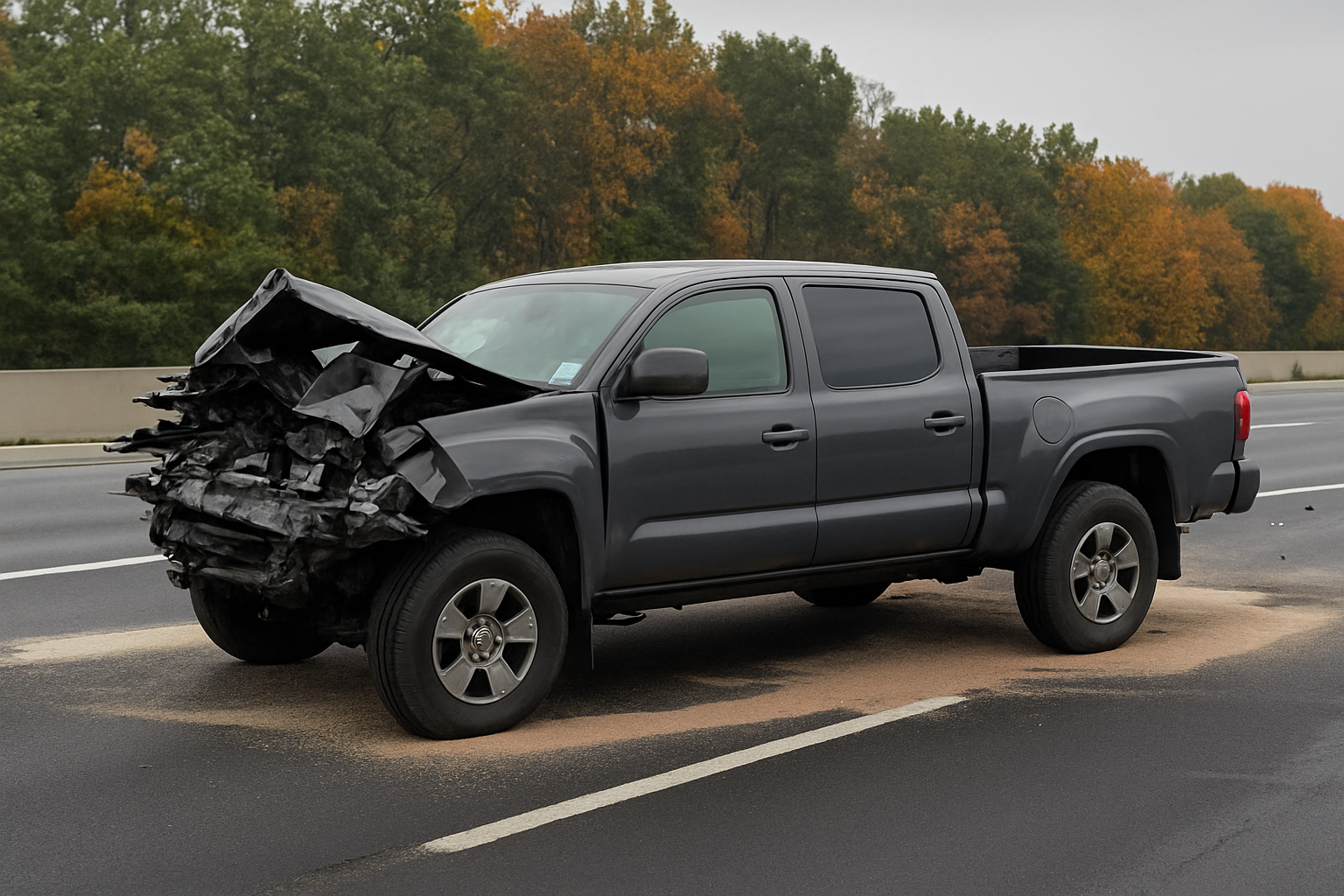
Maine requires SR-22 filing for 3 years minimum after a hit-and-run conviction, but your actual duration depends on whether you're classified as a habitual offender — a status that extends filing to 6 years and blocks early reinstatement.
What a Hit-and-Run Conviction Triggers in Maine
A hit-and-run conviction in Maine — defined under 29-A M.R.S. § 2254 as leaving the scene of an accident involving injury, death, or property damage — results in immediate license suspension and mandatory SR-22 filing for 3 years minimum. The Maine Bureau of Motor Vehicles (BMV) will not reinstate your license until you submit proof of financial responsibility via SR-22 certificate, pay reinstatement fees ranging from $50 to $500 depending on the severity of the accident, and complete any court-ordered requirements.
If your hit-and-run involved injury or death, the suspension period extends to a minimum of 1 year, and you may face habitual offender designation if you have two or more major violations within the prior 5 years. Habitual offender status under 29-A M.R.S. § 2557 triggers a 6-year SR-22 filing requirement and blocks license reinstatement for 3 years minimum. Most drivers convicted of hit-and-run with any prior moving violations fall into this category without realizing it until they attempt reinstatement.
The practical difference: a standard hit-and-run conviction costs you 3 years of SR-22 filing at elevated rates, while habitual offender classification doubles that to 6 years and adds years to the time before you can legally drive again. Maine BMV does not issue conditional or hardship licenses to habitual offenders during the suspension period, meaning you cannot drive for work, medical appointments, or any other reason until the suspension lifts. Maine SR-22 requirements
SR-22 Filing Costs and Rate Impact in Maine
The SR-22 certificate itself costs $15 to $50 to file in Maine, depending on the carrier. The certificate is not insurance — it's proof your liability policy meets Maine's minimum coverage requirements of 50/100/25 ($50,000 bodily injury per person, $100,000 per accident, $25,000 property damage). After a hit-and-run conviction, expect your liability insurance premium to increase by 80% to 150% compared to your pre-conviction rate, with higher increases if the accident involved injury or significant property damage.
For a driver who previously paid $1,200 per year for liability coverage, the post-conviction rate typically ranges from $2,160 to $3,000 annually, or $180 to $250 per month. If you're classified as a habitual offender, carriers perceive you as maximum-risk, and some may refuse coverage outright. You'll likely need to work with a non-standard or high-risk carrier — companies like The General, Direct Auto, or regional non-standard writers who specialize in post-conviction policies.
Maine does not cap insurance rate increases for high-risk drivers. Your premium is based entirely on the carrier's risk assessment, which factors in the hit-and-run conviction, any prior violations, your age, and whether you maintained continuous coverage. Drivers who let their policy lapse after the conviction or before SR-22 filing face an additional rate penalty of 20% to 40%, since gaps in coverage signal even higher risk.
Reinstatement fees to the Maine BMV add another $50 to $500 depending on the circumstances of your hit-and-run. If the accident involved injury or death, you'll pay the higher end. These fees are separate from SR-22 filing costs and insurance premiums and must be paid in full before your license is returned.
Who Writes SR-22 Policies After Hit-and-Run in Maine
Not all carriers write SR-22 policies in Maine, and even fewer will accept drivers with recent hit-and-run convictions. Standard carriers — including most major national insurers — typically decline coverage for drivers with convictions less than 3 years old. You'll need to work with non-standard or high-risk insurers who specialize in post-conviction policies.
Carriers that regularly write SR-22 policies for hit-and-run drivers in Maine include The General, Direct Auto, Acceptance Insurance, and regional non-standard writers like GMAC Insurance and National General. These companies price policies based on conviction type, time since the incident, and your prior insurance history. If you maintained continuous coverage before and after the conviction, you'll receive better rates than someone who let their policy lapse.
Some drivers attempt to secure non-owner SR-22 policies if they no longer own a vehicle but need to reinstate their license. A non-owner SR-22 policy provides liability coverage when you drive a borrowed or rented vehicle and satisfies Maine's SR-22 requirement. These policies typically cost 30% to 50% less than standard owner policies, ranging from $400 to $800 per year depending on your driving record. However, if you own a vehicle or live with someone who does, Maine BMV may require an owner policy instead.
Brokers who specialize in high-risk placements can access carriers you won't find through direct searches. If you're quoted $300+ per month or denied by multiple carriers, a high-risk broker can shop your profile to non-standard markets and find coverage that fits your situation.
How Long You'll Carry SR-22 and What Ends It
Maine requires 3 years of continuous SR-22 filing for a standard hit-and-run conviction, starting from the date of your license reinstatement — not the date of conviction or suspension. If your license was suspended for 6 months and you waited another 4 months to file SR-22 and reinstate, your 3-year SR-22 period begins on reinstatement day. Any lapse in coverage during those 3 years resets the clock and triggers a new suspension.
If you're classified as a habitual offender, the SR-22 requirement extends to 6 years. There is no early termination option, no hardship waiver, and no reduction for clean driving during the filing period. The only way to end the requirement is to maintain continuous coverage and wait out the full term. If your policy lapses for even one day, your insurer must notify Maine BMV within 10 days, and your license will be suspended again immediately.
Once the required filing period ends, you must contact your insurer and request removal of the SR-22 endorsement. Some carriers remove it automatically, but most require you to initiate the request. After removal, your rates typically drop by 20% to 40% within the first renewal cycle, though the hit-and-run conviction will still affect your premium for 5 to 7 years depending on the carrier's underwriting rules.
Drivers often assume that paying off fines or completing probation ends the SR-22 requirement early. It does not. Only continuous filing for the full court-ordered or BMV-mandated period satisfies the requirement. If you're unsure of your exact SR-22 end date, contact Maine BMV directly — carriers do not track this information for you.
Your Path Forward: What to Do Now
If you've been convicted of hit-and-run in Maine and need SR-22 coverage, start by confirming your exact filing period and suspension length with the Maine Bureau of Motor Vehicles. Call (207) 624-9000 or visit your local BMV office with your conviction paperwork and any correspondence from the court. Ask whether you've been classified as a habitual offender, as this determines whether you're facing a 3-year or 6-year SR-22 requirement.
Once you know your filing period, request SR-22 quotes from at least three non-standard carriers or a high-risk broker who can shop multiple markets. Provide your conviction date, details of the accident, and your full driving history for the past 5 years. Rates vary significantly between carriers for post-conviction drivers, and the first quote you receive is rarely the lowest available.
Do not let your policy lapse once it's in force. Set up automatic payments if your carrier allows it, and monitor your bank account to ensure payments process on time. A single missed payment can trigger SR-22 cancellation, which results in immediate license suspension and forces you to restart the entire filing period. If you need to switch carriers during your SR-22 term, ensure the new policy is active and the new SR-22 is filed with Maine BMV before canceling your old policy. Any gap — even one day — resets the clock.
If you're currently suspended and unable to afford the reinstatement fees or the first month's premium, ask your insurer about payment plans or reduced down payment options. Some non-standard carriers allow you to pay reinstatement fees in installments or offer first-month discounts to drivers transitioning from suspension. The sooner you file SR-22 and reinstate, the sooner your 3- or 6-year filing period begins. compare high-risk quotes